


Keynote speakers for the 2026 Fall Pastors’ Conference will be Rev. Heath Curtis, president of the Southern Illinois District, and Rev. Dr. Benjamin Mayes, associate professor of Historical Theology at CTSFW.
Rev. Heath Curtis — “Ordered Freedom”
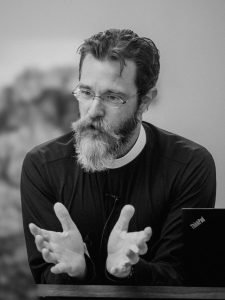 American Lutheranism, and the Missouri Synod in particular, has always been fighting the worship wars. The intensity of the war has waxed and waned; the battlelines have been drawn and redrawn. A chief battle ground has been the Confessions themselves. What do AC VII, AC XXIV, FC X, etc., actually have to do with us today? What do these texts actually mean? Do they bind us in any way? In this presentation we will approach all these questions from an honest look at history: how did the men who wrote and first subscribed to those Confessions actually order their churches in the freedom of Christ?
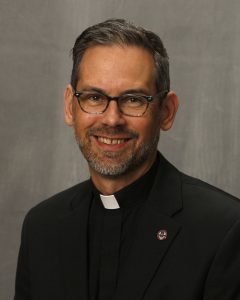 Rev. Dr. Benjamin Mayes — “A Pastoral Plan for Handling Cases of Divorce and Remarriage”
Since Scripture requires the church to treat people in different ways according to their marital situations, the church must exercise discernment or adjudication in a formal way. This is where many Christians are perplexed. They know from Scripture that something should be done to discern between different situations, but they do not know how to do it. To avoid arbitrary practice, ecclesiastical adjudication is necessary. The practice of this marriage adjudication belongs to both pastors and lay leaders. Ecclesiastical adjudication is needed whenever the civil government cannot be trusted to regulate marriage in accordance with God’s Word. As the church handles cases and keeps good records, a casuistry literature will naturally arise.
But how to implement ecclesiastical adjudication for divorce and remarriage cases? Suggested procedures are drawn mainly from the history of the Lutheran Church. If a church cannot implement courts above the congregational level (such as on a regional, national, or even worldwide level), then at least congregations and pastors should have recourse to ad-hoc committees of “wise men” (1 Cor 6:5) to give discernment in cases of divorce and remarriage. We will consider standards of fairness and due process from history to sharpen the thinking and fairness of contemporary judges and discernment committee members. Perhaps the most difficult, complicated procedures arise when a congregation is faced with an already done deed of wrongful divorce and remarriage. Untangling the moral threads of these situations can be difficult. Pastoral care treating the people in difficult cases will, finally, be considered.
Benjamin T. G. Mayes joined the Concordia Theological Seminary (CTSFW), Fort Wayne, faculty in 2016. He serves as associate professor and chairman of Historical Theology. His current research interests include the historical precedents to the Book of Concord and the reception and use of the Book of Concord after 1580.
He earned the degree of Doctor of Philosophy in Historical Theology from Calvin Theological Seminary, Grand Rapids, Michigan, in 2009. His dissertation was published as “Counsel and Conscience: Lutheran Casuistry and Moral Reasoning after the Reformation” (Göttingen: Vandenhoeck & Ruprecht, 2011). He received his Master of Divinity degree from CTSFW in 2003. He graduated from Concordia University, Nebraska, in 1997 with a degree in music and pre-seminary studies and spent a year of exchange study at the Lutherische Theologische Hochschule in Oberursel, Germany.
He served as associate pastor at Our Savior Lutheran Church, Grand Rapids, from 2003 to 2006, before being called to Concordia Publishing House, St. Louis, Missouri, where he served as editor for professional and academic books. As a member of Emmaus Lutheran Church in urban St. Louis, he served in many pastoral, catechetical and leadership roles for nearly ten years. Mayes continues to serve as co-general editor for the new volumes of Luther’s Works: American Edition. He has finished his edition of Johann Gerhard’s Theological Commonplaces (Concordia Publishing House). His most recent book is Divorce and Remarriage: Ecclesiastical Discernment and Pastoral Care (Concordia Publishing House, 2026).
He is married to Rebecca and has two sons.